


Office 365 Group Migration
Microsoft 365 Group migration is broader than moving a Group mailbox. A Microsoft 365 Group is a shared membership and collaboration object that can be connected to an Exchange shared mailbox and calendar, SharePoint content, Planner, and, when applicable, Microsoft Teams. The migration scope therefore depends on which Group-connected resources need to be retained in the target environment.
This page focuses on planning and migrating the supported Group mailbox content documented in the current EdbMails workflow, while identifying connected workloads that must be reviewed separately. For broader Microsoft 365 migration capabilities, see the Office 365 migration Tool.
What Does Microsoft 365 Group Migration Involve?
A Group migration can involve more than conversations in the Exchange Group mailbox. Before migration, inventory the Group identity, owners, members, guests, mailbox/calendar content, and any connected SharePoint, Teams, or Planner resources. Then decide which components are supported by the selected migration workflow and which require a separate workload-specific migration or recreation process.
What Is a Microsoft 365 Group?
| Group component | What it contains or controls |
|---|---|
| Group identity | Name, email address/aliases, privacy and Group configuration. |
| Owners and members | Membership used to control access to Group-connected resources. |
| Group mailbox | Group conversations and email. |
| Group calendar | Shared calendar associated with the Group. |
| SharePoint site | Files, document libraries and site content connected to the Group. |
| Planner | Plans and tasks when Planner is used with the Group. |
| Microsoft Teams | Team and channels when a Team is connected to the Microsoft 365 Group. |
Microsoft 365 Group Migration Scope
Do not assume that migrating a Group mailbox automatically recreates every Group-connected workload. Use the following scope check before starting.
| Component | Migration consideration |
|---|---|
| Group identity | Confirm whether the target Group already exists or must be provisioned, and verify naming, address and privacy requirements. |
| Owners and members | Map source identities to target identities and verify owner/member assignment separately. |
| Group mailbox | The current EdbMails procedure on this page documents selection, mapping and migration of Group mailbox content. |
| Calendar | Validate the calendar content supported by the selected Group mailbox workflow. |
| SharePoint site | Treat as a separate SharePoint workload unless the selected migration project explicitly includes it. |
| Microsoft Teams | Treat as a separate Teams workload when the Group is Teams-connected. |
| Planner | Confirm separate Planner support and limitations before including plans or tasks in scope. |
| Guest users | Review target-tenant guest access and identity requirements before recreating membership. |
| Group settings | Some settings, aliases or policies may require separate target-side configuration. |
Common Office 365 Group Migration Scenarios
- Tenant consolidation: Move Group mailbox content and prepare target Groups while consolidating multiple Microsoft 365 tenants.
- Merger or acquisition: Map source users and Groups to identities and resources in the receiving tenant.
- Organizational restructuring: Reorganize Group resources into a different Microsoft 365 environment.
- Group-to-Group migration: Keep the Microsoft 365 Group collaboration model at the destination.
- Group-to-mailbox migration: Move supported mailbox-oriented content to an Exchange mailbox while recognizing that a mailbox does not recreate the complete Microsoft 365 Group experience.
When the project is specifically cross-tenant, review the broader tenant-to-tenant migration requirements as well as the workload-specific Group plan on this page.
Choose the Right Target
| Source | Target | Result to plan for |
|---|---|---|
| Microsoft 365 Group | Microsoft 365 Group | Preserves the Group-based destination model, subject to supported workload and configuration handling. |
| Microsoft 365 Group | Shared mailbox | Preserves mailbox-oriented communication only; Group-connected collaboration services are not recreated by the mailbox itself. |
| Microsoft 365 Group | User mailbox | Changes the destination workload model and requires careful mailbox-content validation. |
| Public folder | Microsoft 365 Group | A separate public-folder-to-Group scenario with its own supported content and preparation requirements. |
Microsoft 365 Group Migration Checklist
- Inventory all source Microsoft 365 Groups in scope.
- Identify Group owners, members and external/guest users.
- Map source identities to target users before the migration.
- Identify Groups connected to Microsoft Teams.
- Identify Group-connected SharePoint sites and document libraries.
- Identify Planner usage and any other connected workloads.
- Confirm whether target Groups already exist or must be created.
- Verify Group email addresses, aliases and target-domain requirements.
- Define exactly which Group components the selected EdbMails workflow will migrate.
- Test a representative Group before running a large migration.
- Define post-migration validation criteria for mailbox content, membership and any separately migrated workloads.
Plan for Minimal User Disruption
A staged approach can reduce disruption by allowing source Groups to remain available while supported mailbox content is copied and validated. However, avoid treating “zero downtime” as a universal guarantee. Identity changes, Group addresses, target provisioning, membership updates, connected workloads, and final routing or domain changes can still require coordinated cutover activity.
Migrate Office 365 Group Mailboxes Between Tenants
Step 1: Download and install EdbMails software
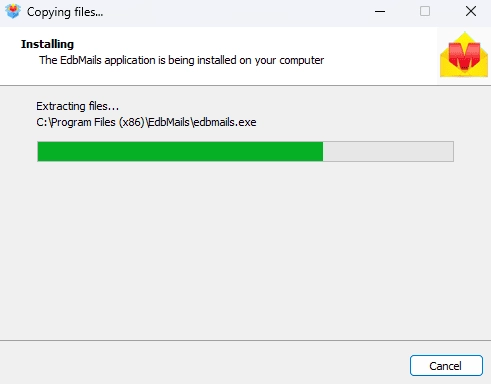
- Download and install EdbMails software on your computer.
See a detailed list of EdbMails system requirements for Office 365 migration.
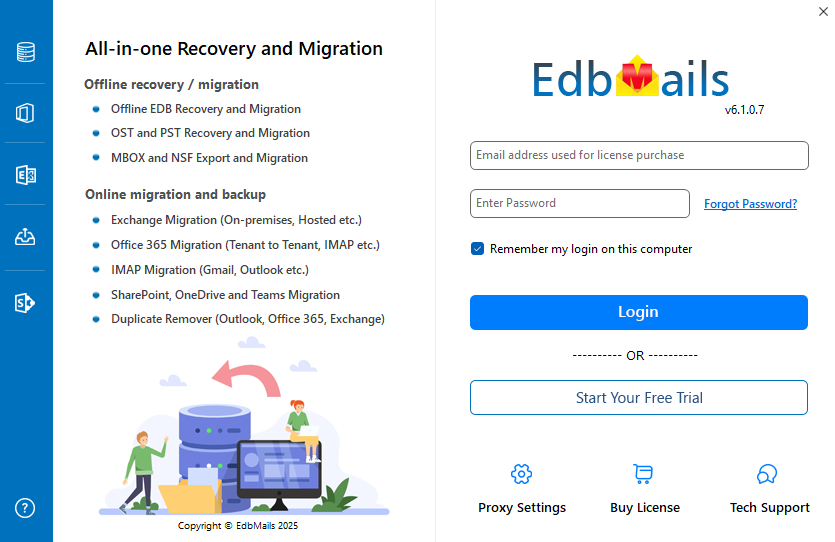
- After you have installed it, click ‘Start Your Free Trial’ to start using the application.
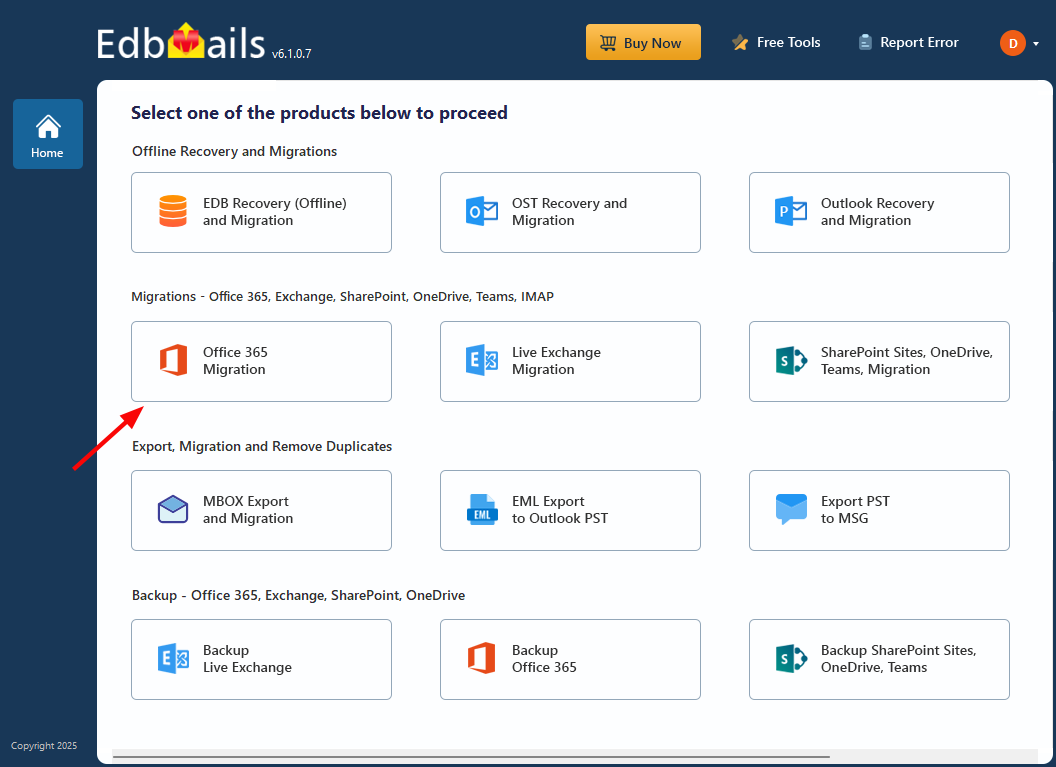
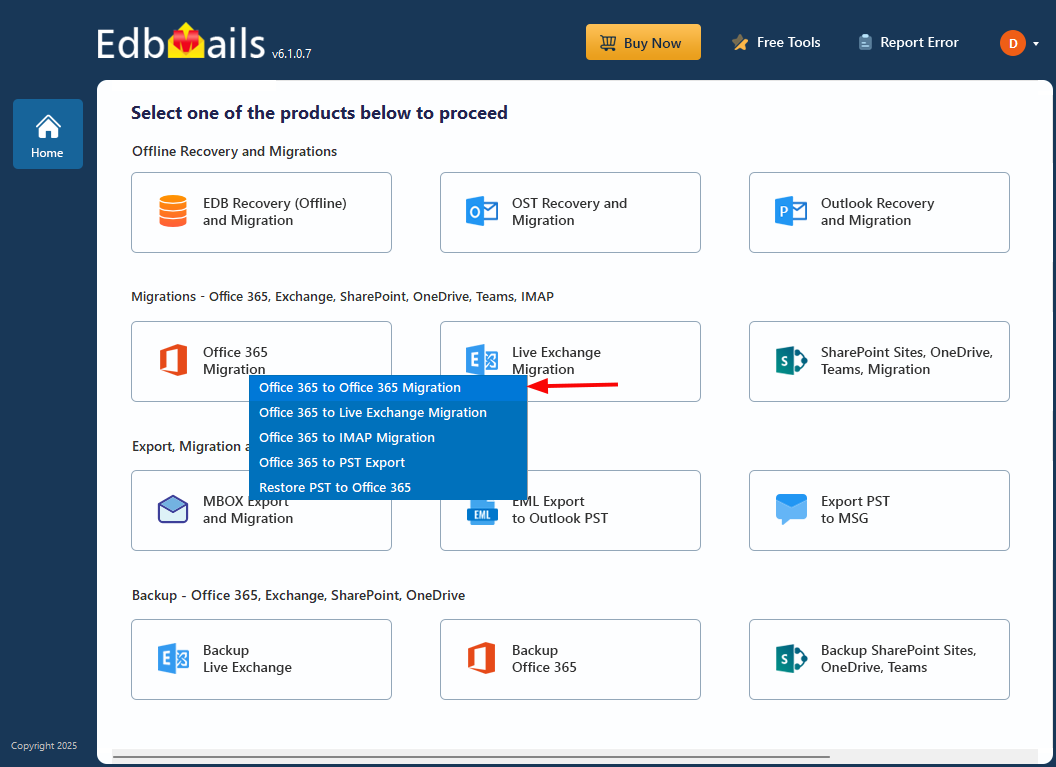
- Select ‘Office 365 Migration’ from the main screen.
Note: If the standard folders such as Inbox, Calendar, or Contacts in your source mailboxes are configured in a different language, they might not automatically map to the corresponding system folders on the target server during migration.
For Instance: If the Inbox in your source mailbox is labeled as ‘Boîte de réception’ (French), it may not automatically map to the ‘Inbox’ (English) on the destination server. To ensure accurate folder mapping, you can choose one of the following options:
Set the same language on both the source and target servers.List the folders from the target mailbox and manually map them to the source mailbox folders.Use a CSV file to define custom mappings between source and target folders. - Select ‘Office 365 to Office 365 Migration’ option from the dropdown list
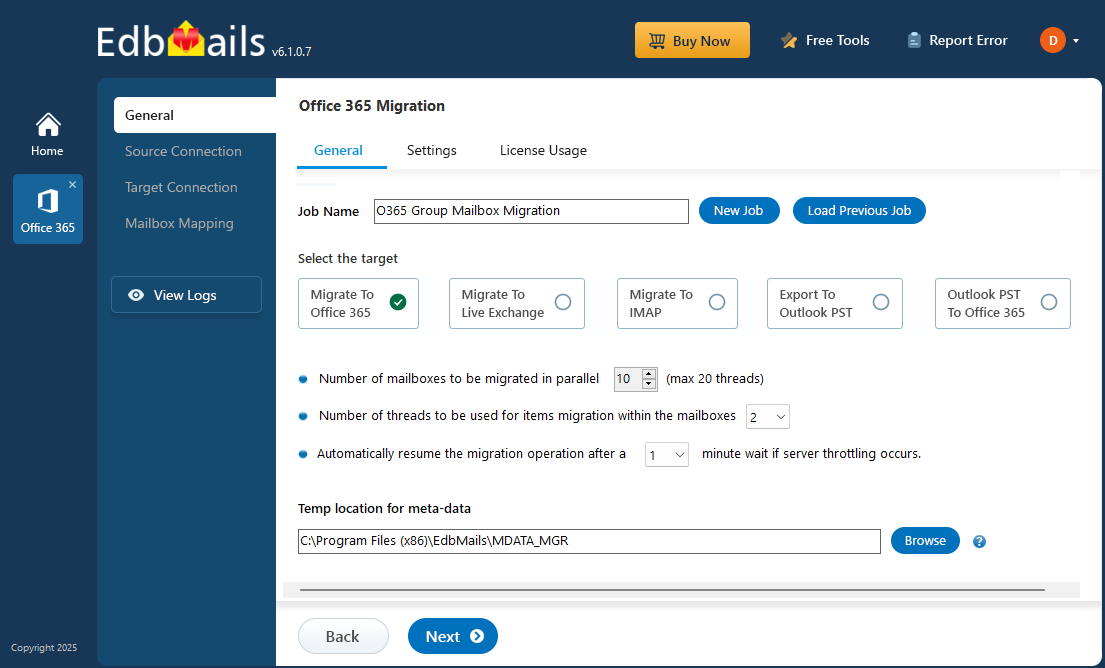
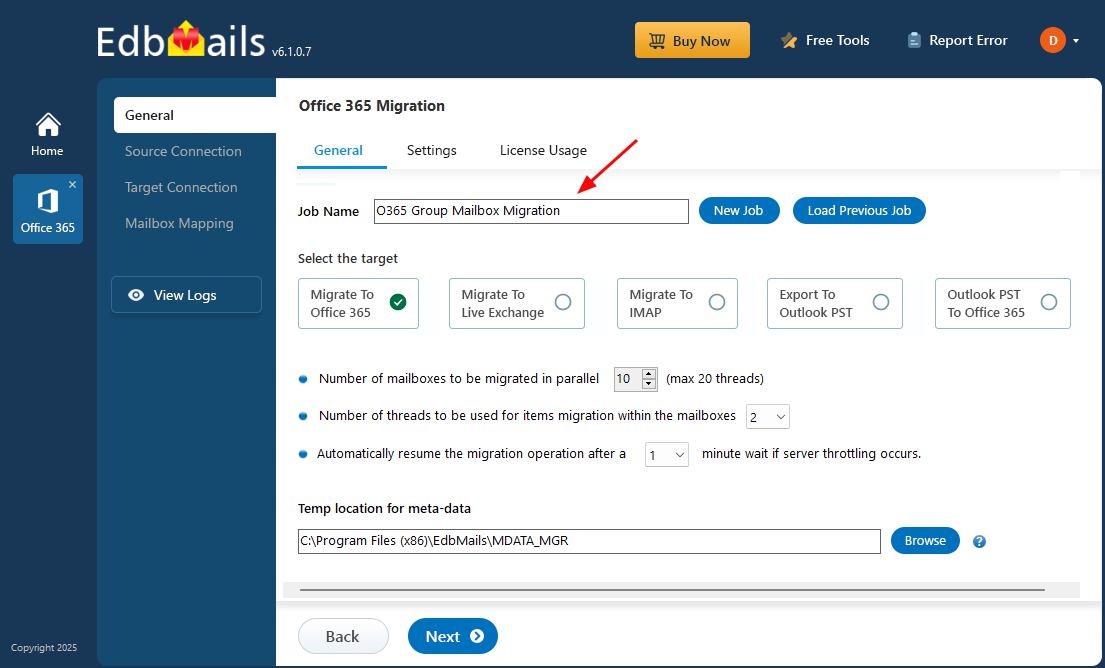
- You can proceed with the default job name, or click the ‘New Job’ button to change the job name.
- Download and install EdbMails software on your computer.
Step 2: Connect to source Office 365 server
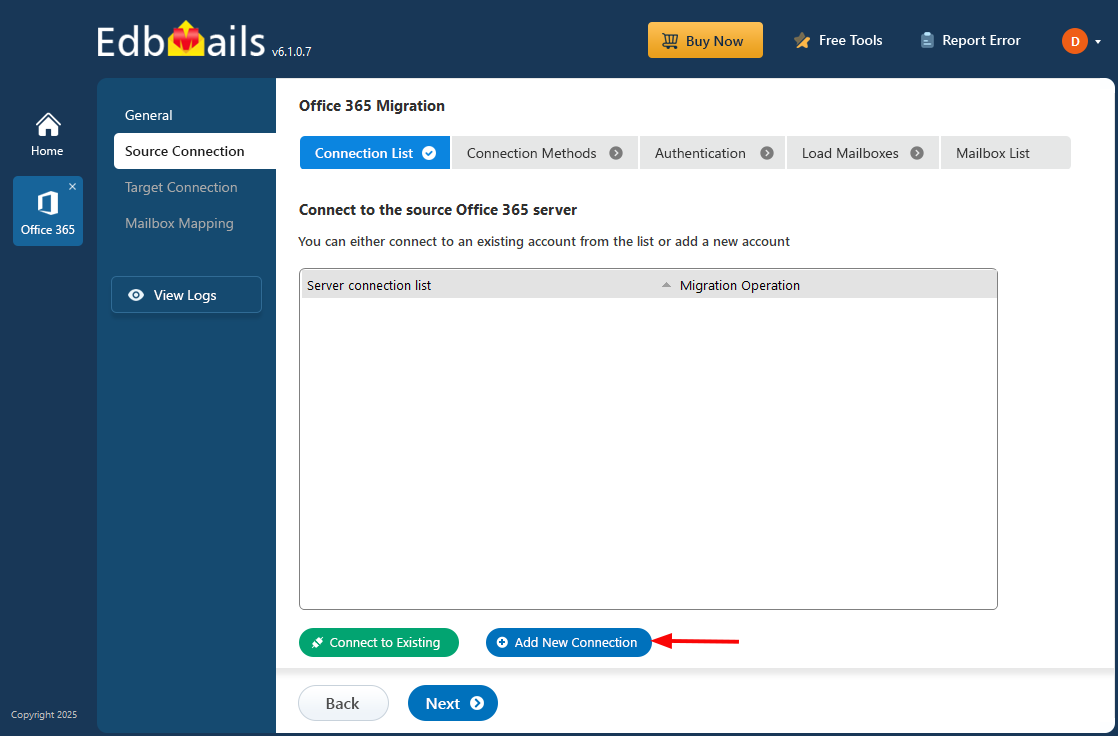
- Click on ‘Add New Connection’ to set up a new connection to the source Office 365 account. If you've connected before, simply choose the existing connection from the list and click ‘Connect to Existing’ to continue.
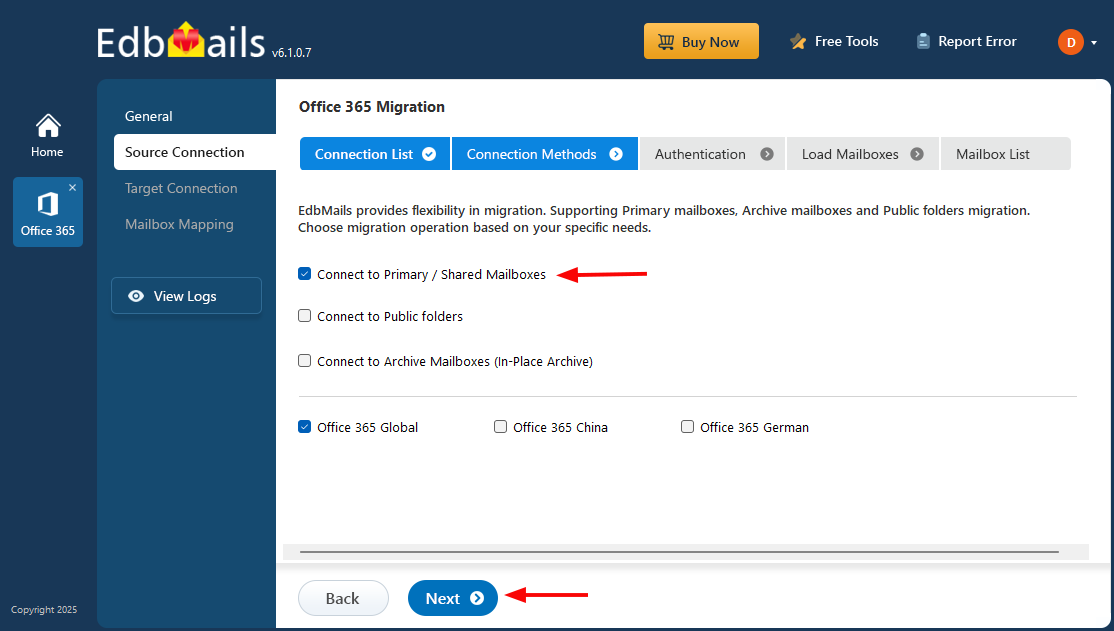
- Select ‘Connect to Primary/Shared Mailboxes’ and click ‘Next’
- Choose one of the authentication methods and click ‘Login’ button to continue.
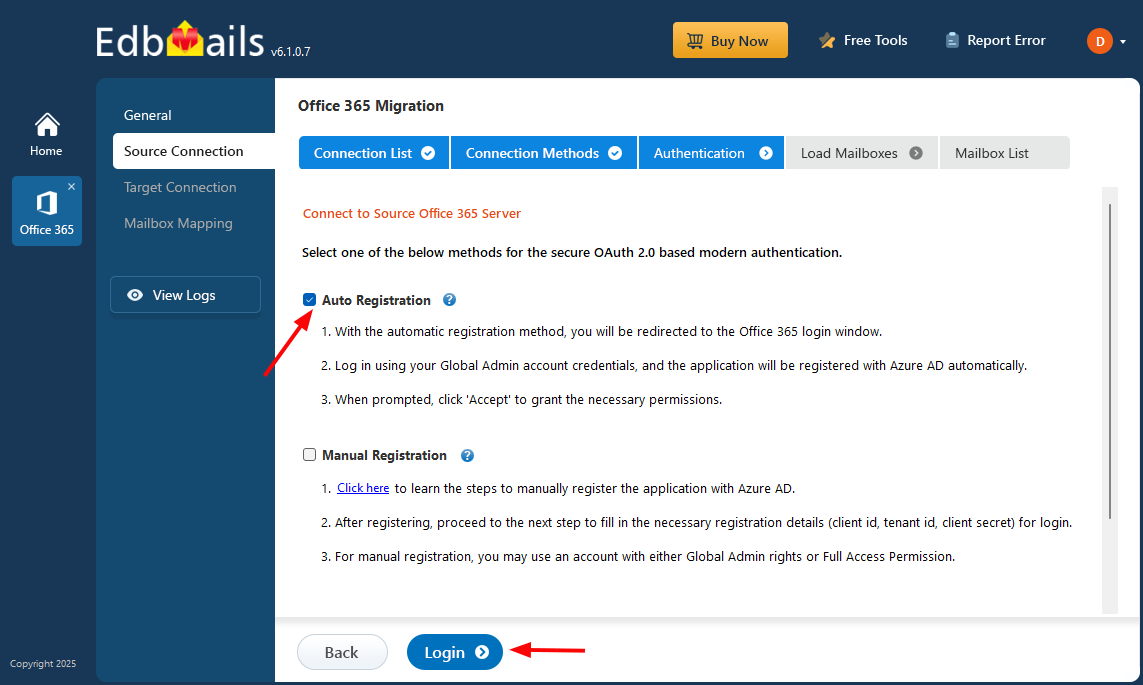
Connect to Office 365 server using secure modern authentication
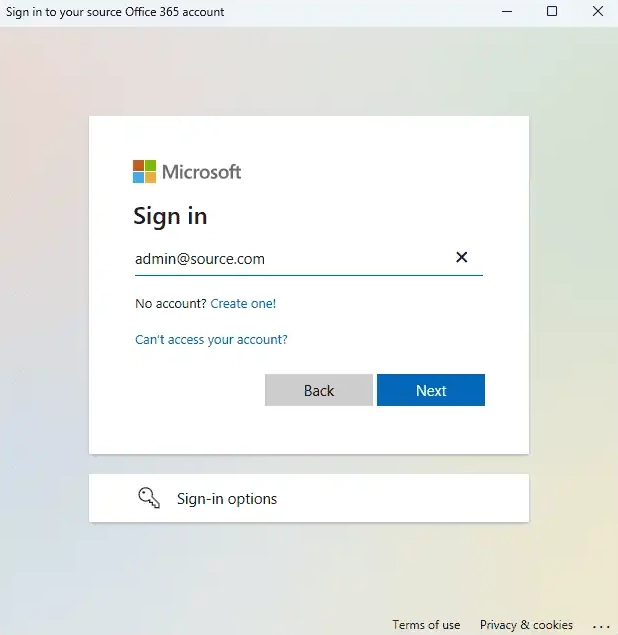
- Authenticate on Microsoft sign-in page.
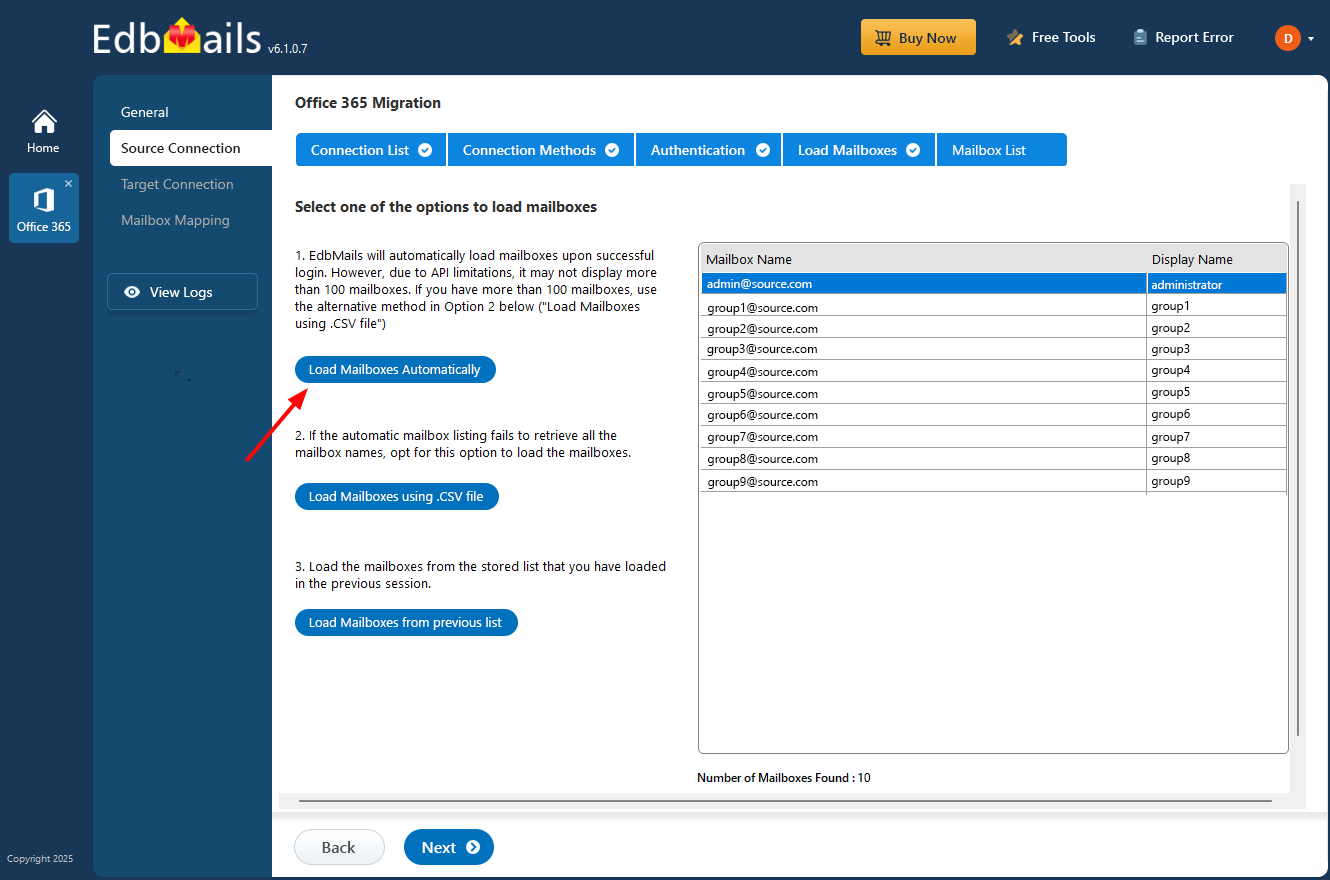
After the successful authentication, choose one of the methods to load the mailboxes. You can also load and migrate the mailboxes using a CSV file.
- Click on ‘Add New Connection’ to set up a new connection to the source Office 365 account. If you've connected before, simply choose the existing connection from the list and click ‘Connect to Existing’ to continue.
Step 3: Select source Office 365 Group mailboxes
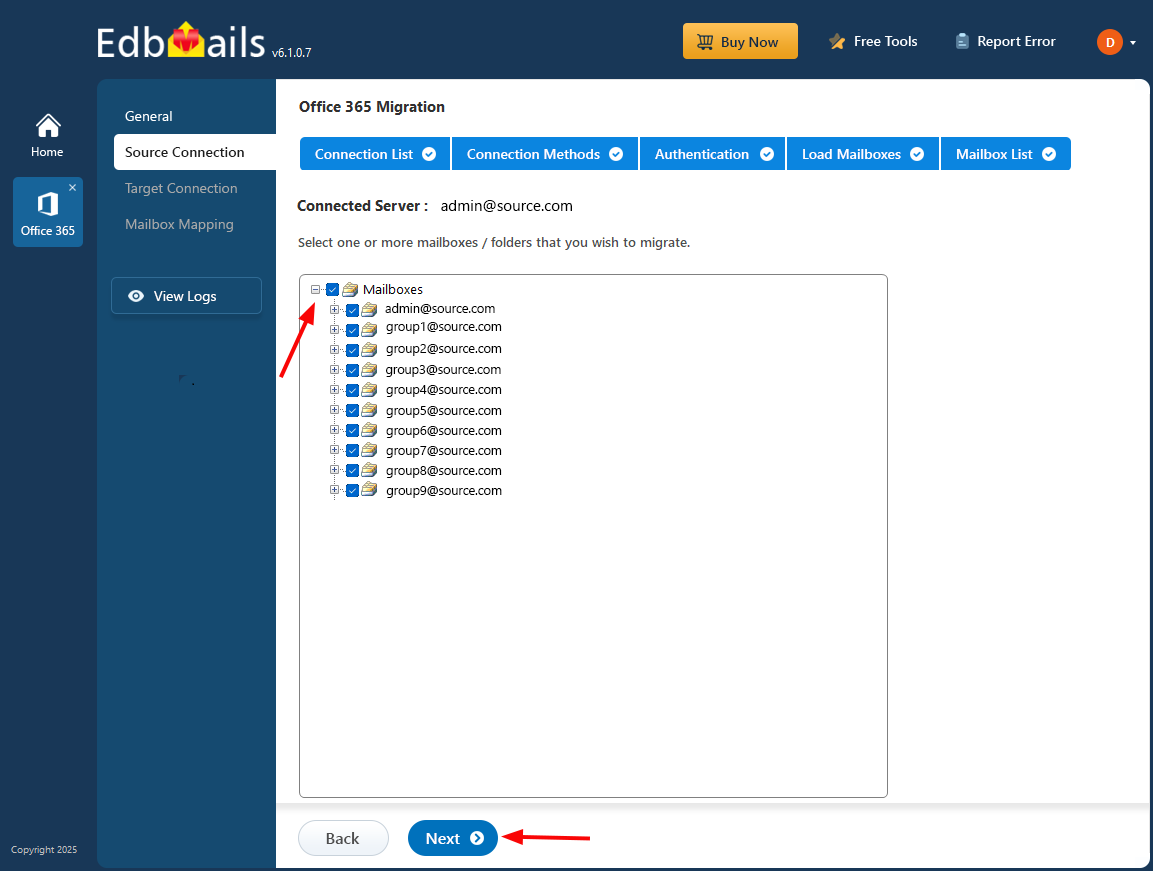
- EdbMails displays all the group mailboxes and associated mailboxes from your Office 365 tenant.
- Select the group or groups that you want to migrate to the target and click ‘Next’ You can select the required group by browsing through the list of groups.
Tip: If you need a PST-based alternative for mailbox content, see the office 365 migration to pst guide.
Step 4: Connect to target Office 365 tenant
- Click ‘Add New Connection’ to set up a fresh connection with the target Office 365 account. If you prefer using an existing connection, simply select it from the list and click ‘Connect to Existing’ to continue.
- Select the Connect to Primary/Shared Mailboxes and click the ‘Next’ button.
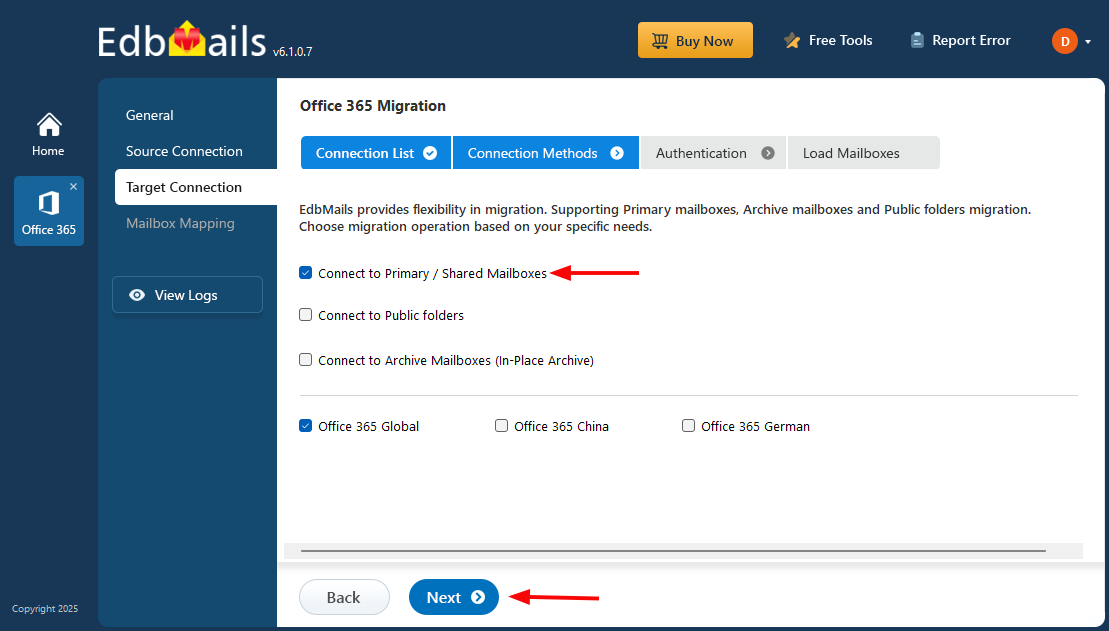
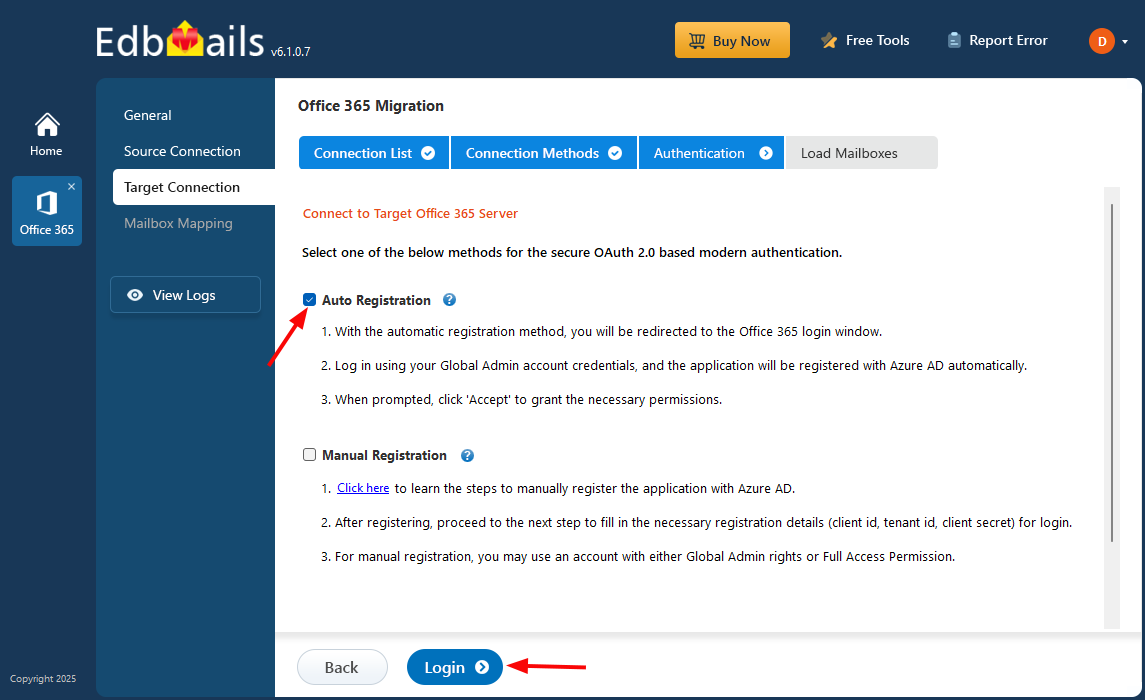
- Select a secure OAuth 2.0-based modern authentication method to establish a connection with the target server.
- Click the ‘Login’ button.
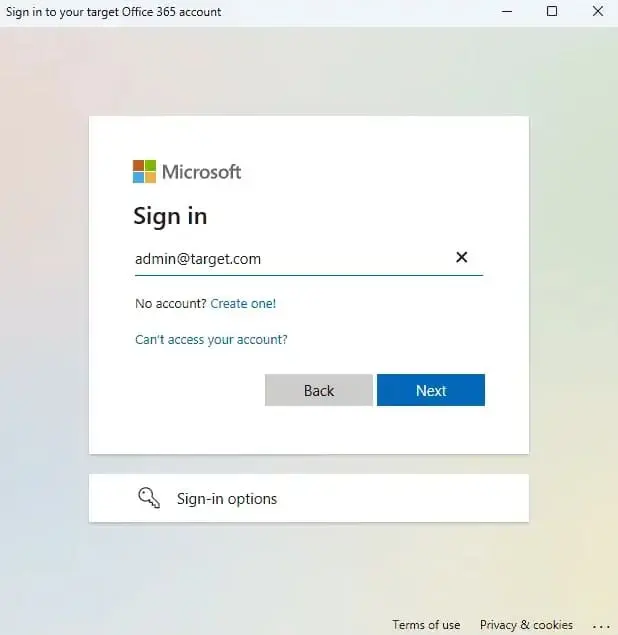
- Authenticate on Microsoft sign-in page.
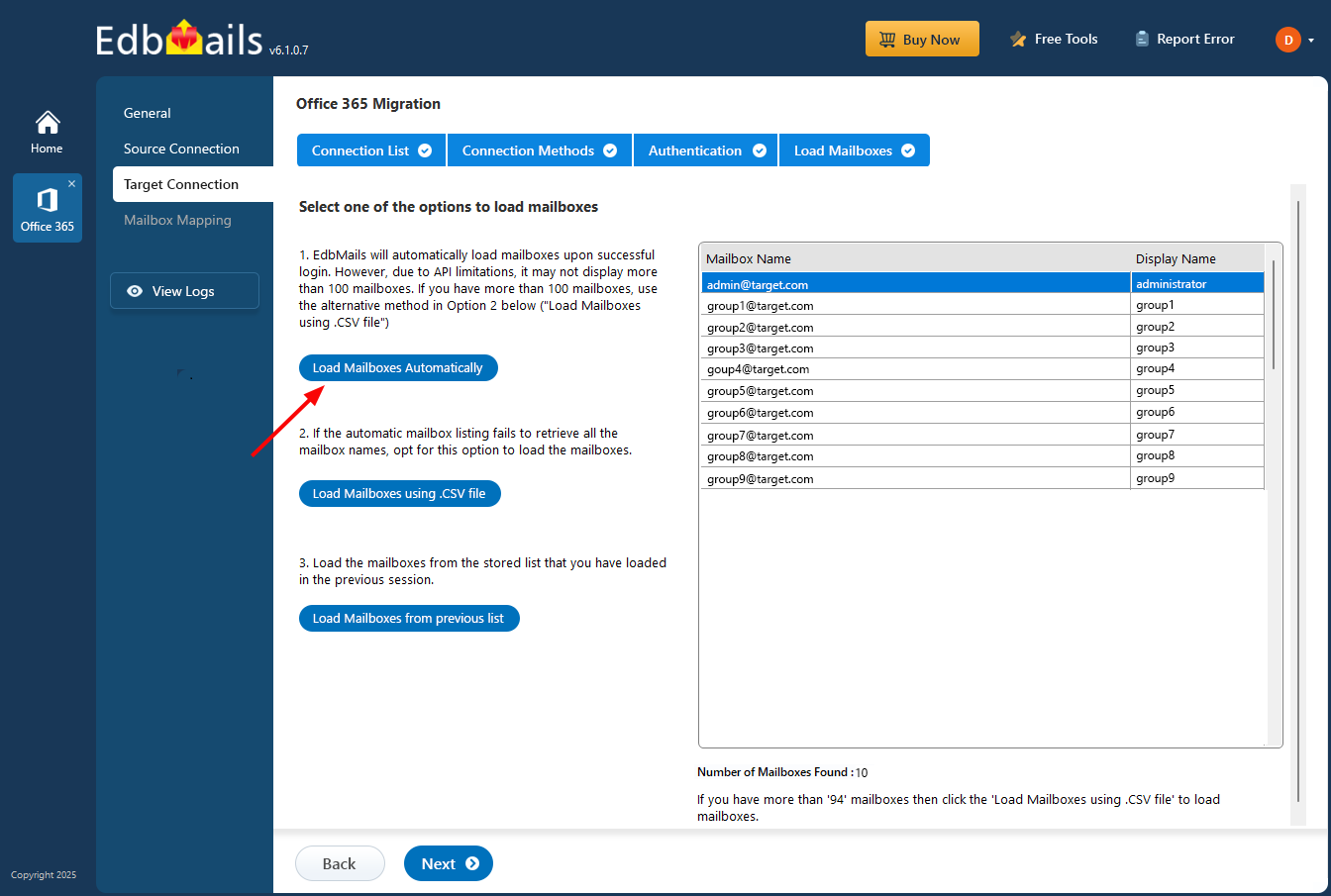
- EdbMails automatically loads mailboxes and also allows CSV file imports for efficient mailbox loading into Office 365.
Step 5: Map the source and target Group mailboxes
- Select the mailbox mapping option that best aligns with your requirements.
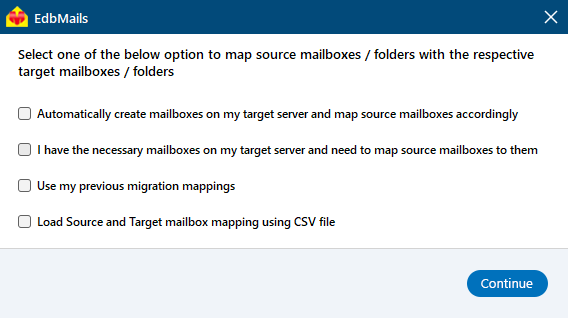
- Choose the appropriate mailbox mapping option and verify the source-to-target Group mailbox mapping before migration. Automatic mapping can reduce manual work, but administrators should review mappings for accuracy before starting the job.
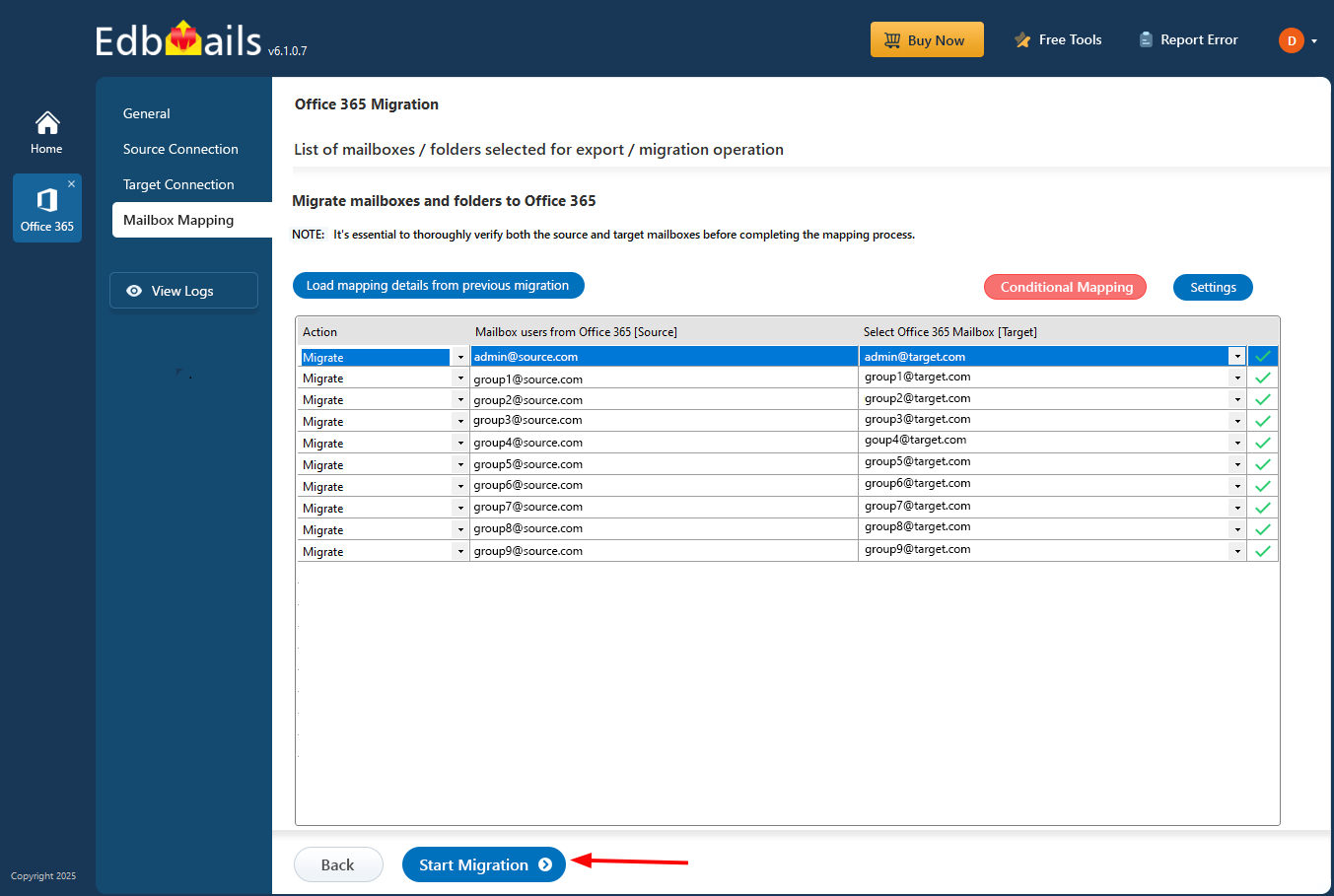
- Select the mailbox mapping option that best aligns with your requirements.
Step 6: Start the Group mailbox migration
- Once the mailboxes are mapped, click the ‘Start Migration’ button to begin the migration process. To review the migration report, click the ‘View Log’ button, which provides a comprehensive report detailing the number of emails, folders, and mailbox items successfully migrated.
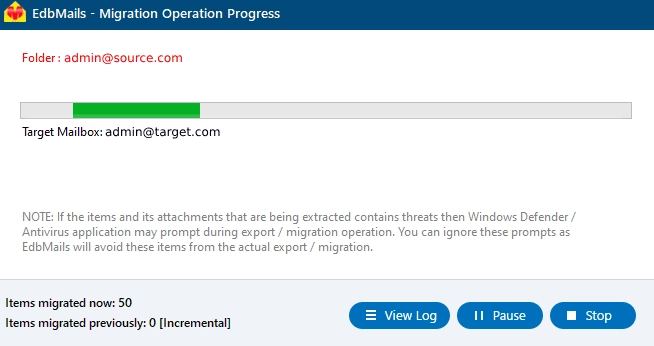
- Once the mailboxes are mapped, click the ‘Start Migration’ button to begin the migration process. To review the migration report, click the ‘View Log’ button, which provides a comprehensive report detailing the number of emails, folders, and mailbox items successfully migrated.
Validate Microsoft 365 Groups After Migration
Review the migration report and validate representative Groups rather than assuming that every Group component moved because the mailbox migration completed.
- Group identity: Verify Group name, target address, aliases and privacy settings where applicable.
- Membership: Verify owners, members and guest users separately.
- Group mailbox: Check conversations, folders, attachments and representative mailbox items.
- Calendar: Validate representative calendar entries where calendar content is in scope.
- Connected workloads: If SharePoint, Teams or Planner were part of the project, validate those workloads through their respective migration process.
- Reports: Review EdbMails logs/reports for skipped, failed or unmapped mailbox items and resolve exceptions before retiring the source.
Microsoft 365 Group Migration Limitations and Considerations
- A Microsoft 365 Group is broader than its Exchange mailbox; mailbox migration alone does not prove that every connected workload has migrated.
- Source and target user identities may differ and require explicit mapping.
- Guest users depend on the target tenant's external collaboration policies and identity state.
- SharePoint, Teams and Planner should be treated as workload-specific migration components unless explicitly included and supported in the selected workflow.
- Group names, aliases, privacy settings and policies may require separate target-side validation or recreation.
- Do not rely on “all data” or “no data loss” claims; validate the supported scope and migration reports for each project.
Public Folder to Microsoft 365 Group Is a Different Scenario
Migrating an existing Microsoft 365 Group between tenants is different from migrating Exchange public folders into Microsoft 365 Groups. Microsoft's native public-folder-to-Group batch migration is designed for supported mail and calendar public-folder content, and the target Groups must be prepared for that workflow.
Related Office 365 Migration Workloads
Use the Group migration workflow only for the workload it is intended to handle. For adjacent Office 365 migration scenarios, use the relevant workload-specific guide:
- For archive mailbox migration to Exchange, see the office 365 archive mailbox to exchange guide.
- For public folders moving between Microsoft 365 environments, see the office 365 public folder migration to office 365 guide.
- For public folders moving to Exchange Server, see the office 365 public folder to exchange guide.
Frequently Asked Questions
What is included in a Microsoft 365 Group migration?
Can Microsoft 365 Groups be migrated between tenants?
Does migrating a Group mailbox also migrate SharePoint, Teams and Planner?
Can a Microsoft 365 Group be migrated to a shared mailbox?
How should I validate a Microsoft 365 Group after migration?